
 Why Study in the Germany ?
 Why Study in the
 Affordable & High-Quality Education
German education provides top-tier learning at a fraction of the cost compared to other countries.
Work While Studying
International students can work up to 20 hours per week.
Attractive Wages
Earn between €12.82 and €20/hour. Higher pay for German-speaking students.
Home to Global Companies
Volkswagen, BMW, Audi, Siemens, Bentley, Škoda and more call Germany home.
Strong Economy
Germany is Europe's strongest economy, leading in growth, employment, and exports.
English-Taught Programs
Many courses are taught in English, especially at private universities.
Post-Study Stay
Non-EU students can stay up to 18 months after graduation to find work.
Permanent Residency Path
Graduates can gain indefinite residency after 5 years of working in Germany.

Best Cities in Germany
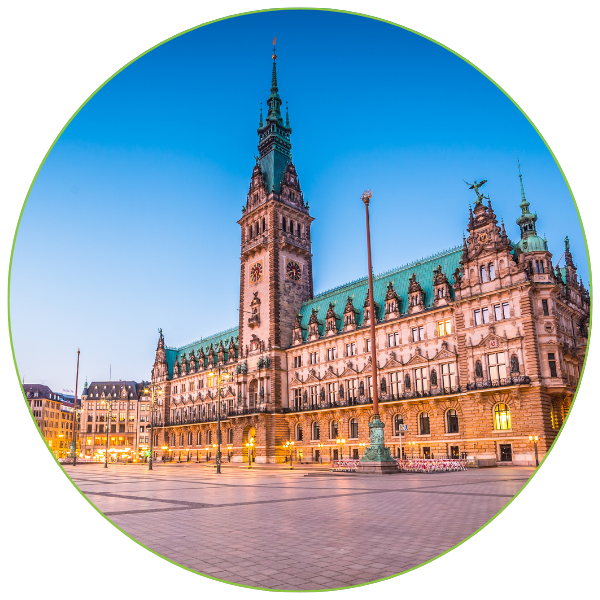
Hamburg
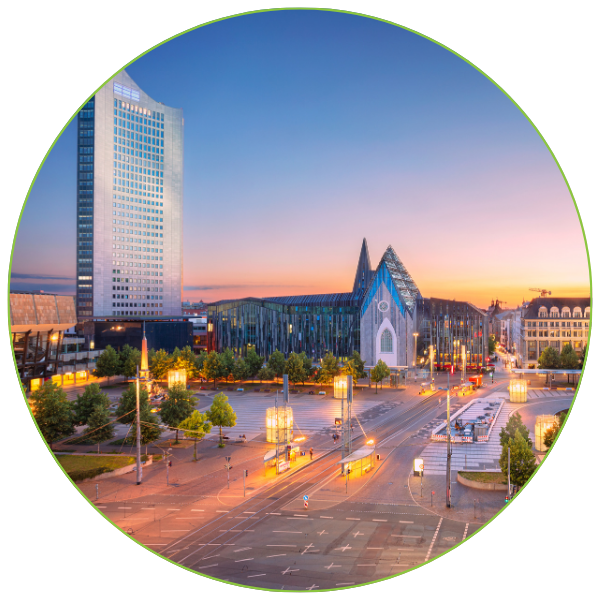
Leipzig
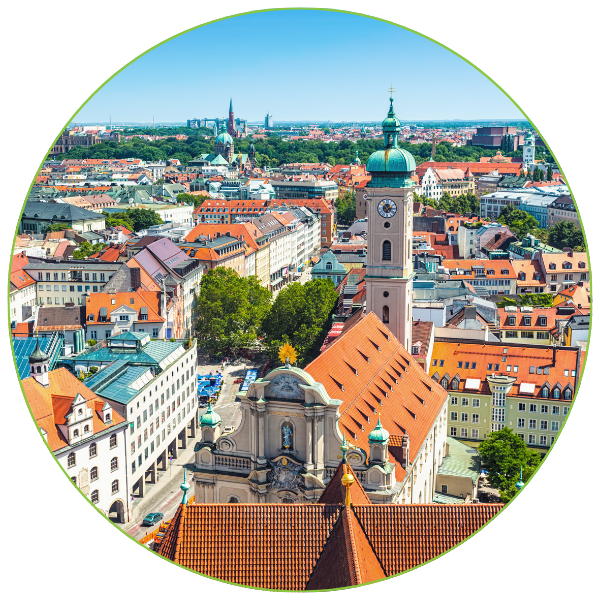
Munich
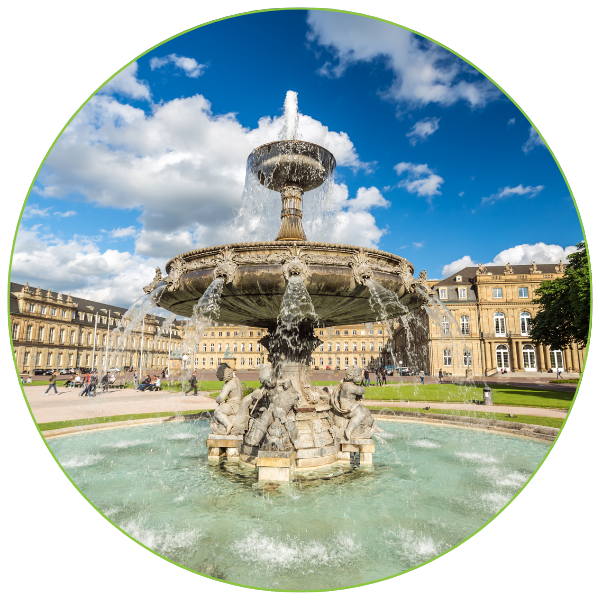
Stuttgart
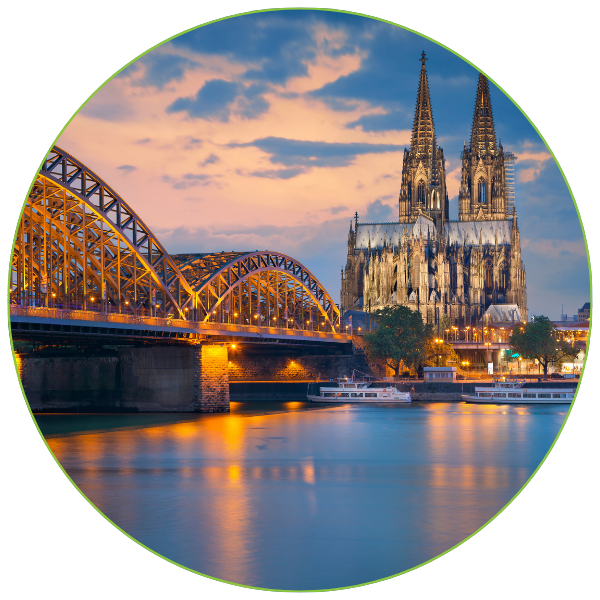
Cologne
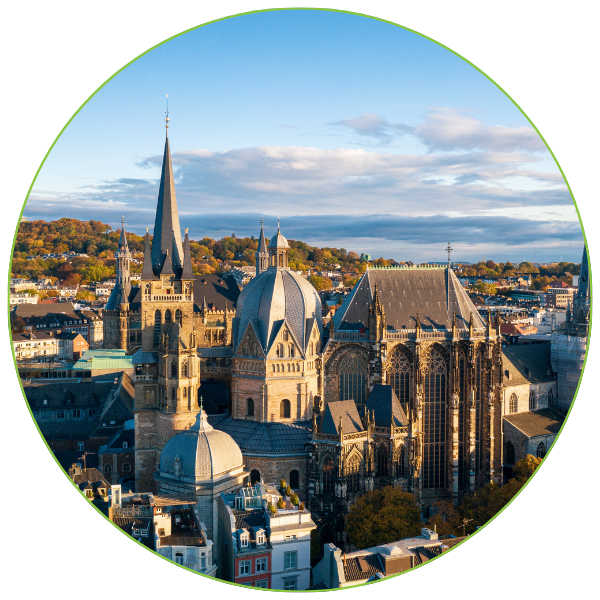
Aachen
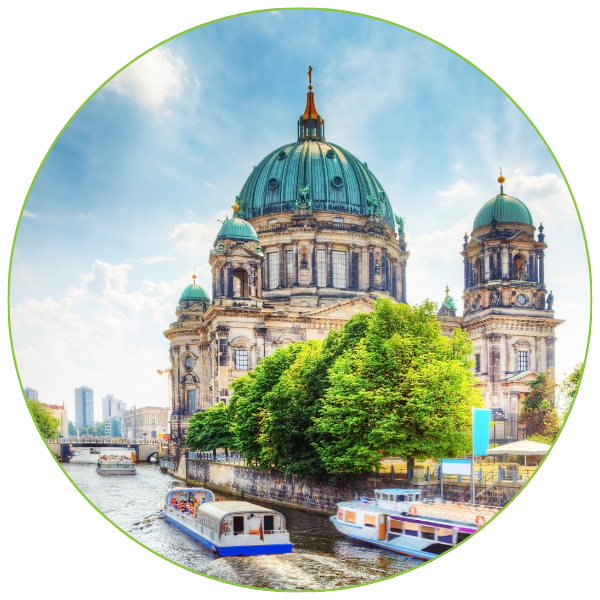
Berlin
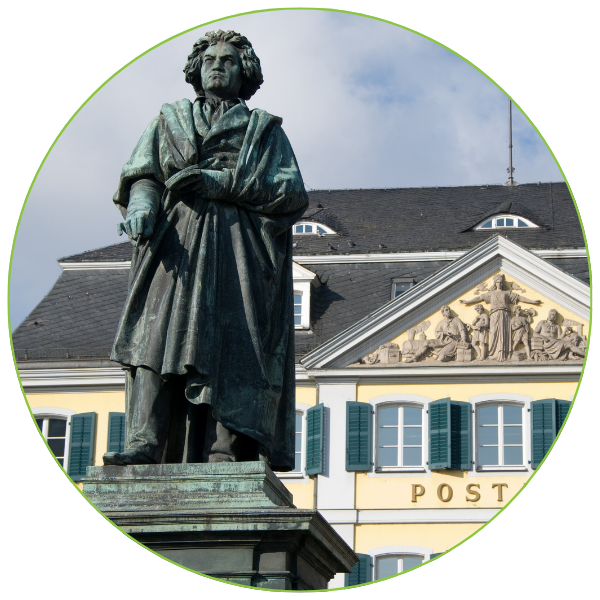
Bonn
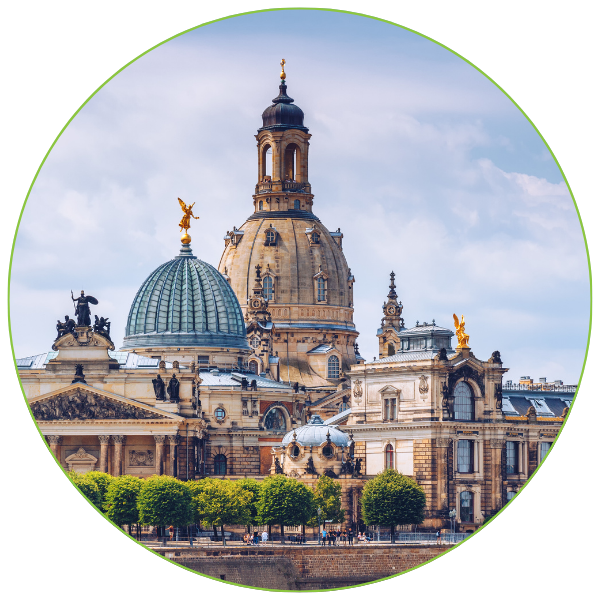
Dresden
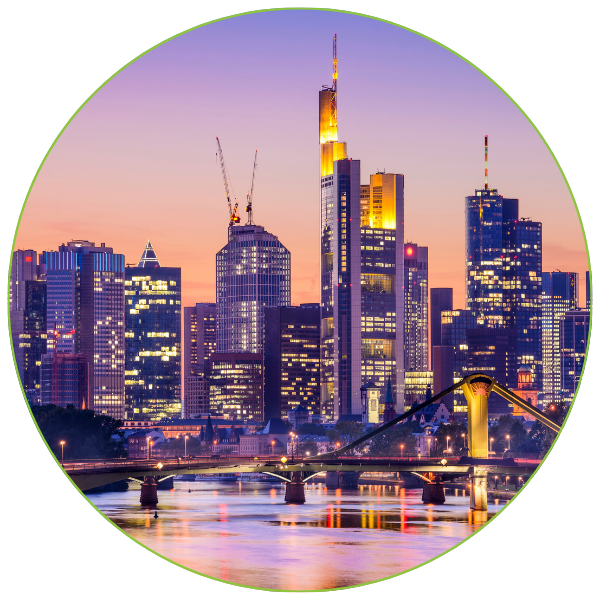
Frankfurt
Top German Universities You Should Know
Universität Bonn
Universität Heidelberg
Ludwig Maximilian University of Munich (LMU)
Medizinische Hochschule Hannover
Universität Tübingen
University of Mannheim
University of Würzburg
Popular Programs & Intake Timelines in Germany
Intake timelines (Winter & Summer) and most sought-after courses
Engineering Programs
Mechanical, Electrical, Computer Science
Business & Economics
Finance, MBA, Marketing, HR
Natural Sciences
Biology, Chemistry, Physics
Computer Science & IT
Software, AI, Cybersecurity
Medicine & Health Sciences
Medicine, Nursing, Public Health
Winter Intake
(Sept/Oct)
Primary intake with widest range of programs. Deadlines: May–July (some Aug).
Summer Intake
(Mar/Apr)
Fewer programs, ideal for research-intensive or specialized master’s. Deadlines: Nov–Jan.
Germany is known for Global Career Opportunities
Germany is known for Germany is known for
Germany is known for Cutting-edge Research
Germany is known for Affordable Education
💬 Some universities also offer flexible intakes: April, May, June, or July.
ProgramDuration & Course Structure
Different degree types highlighting durations, structure, and study-work integration.
Bachelor's
3 to 4 years
Comprehensive undergraduate education with focus on academic and skill development.
Master's
1 to 2 years
Postgraduate program with options for research, coursework, and work-integrated learning.
English Language Requirements
Display minimum test scores, accepted exams, waiver options, and pre-sessional programs for studying in Germany.
Accepted Tests
IELTS
Min. 6.0, 6.5, or 7.0 depending on institution/program
Popular
TOEFL (iBT)
Min. score 72–94
Popular
Waivers & Alternatives
🎓 English as Medium of Instruction*
If your previous education was conducted in English, you might be exempt from providing a test score.
Cost of Studying & Living in New Germany
Plan your Germany education budget with a breakdown of tuition and living expenses.
Public Universities
Low or No Tuition Fees
Most bachelor’s & master’s programs have minimal or zero fees
Private Universities
€5,000 – €20,000 / semester
Charged for bachelor’s and master’s programs
International Programs
€5,000 – €30,000 / semester
Specialized courses for global students
€11,904/year
Minimum Proof for Visa: €992/month in a blocked account
- Accommodation (shared)
€350 – €600/month
€4,200 – €7,200
- Food & Groceries
€150 – €250/month
- Transport
€70 – €100/month
€840 – €1,200
- Misc. (phone, internet)
€30 – €50/month
€360 – €600
Scholarships You Should Know
Germany offers various scholarships for international students to support their studies. Apply early and tailor your applications to increase your chances.
Government Scholarships
Government Scholarships
DAAD, BMBF, and other government bodies offering scholarships for international students pursuing masters and doctoral degrees.
- DAAD Scholarships: The German Academic Exchange Service offers various scholarships for international students.
- Government Scholarships: German government scholarships especially for master’s and doctoral degrees.
- Federal Ministry of Education and Research (BMBF) Scholarship: Scholarships for master’s or doctoral degrees.
Varies by scholarship
University Scholarships
University Scholarships
Offered by German universities like TUM, University of Berlin, RWTH Aachen, and more for international students.
- BSBI (Berlin School of Business and Innovation) Scholarship
- SRH Scholarship
- GISMA (GISMA Business School) Scholarship
- IU (International University of Applied Sciences) Scholarship
- EU (European University) Scholarship
- Technical University of Munich (TUM) Scholarship
- University of Berlin Scholarship
- RWTH Aachen University Scholarship
Tiered Financial Support
Private Scholarships
Private Scholarships
Merit-based scholarships such as Deutschlandstipendium, Friedrich Ebert Foundation, and Konrad-Adenauer-Stiftung.
- Deutschlandstipendium: Merit-based, €300 per month for bachelor’s and master’s students.
- Friedrich Ebert Foundation Scholarship: For bachelor’s, master’s, or doctoral students.
- Konrad-Adenauer-Stiftung Scholarship: For bachelor’s, master’s, or doctoral students.
Tuition Contribution (IPU Specific)
Admission & Visa - Documents and Process for Studying in Germany
Passport copy
Updated resume
Academic documents
Work Experience (if any)
Recommendation letters (if any)
Statement of purpose
English proficiency scores
GRE/GMAT score card (if applicable)
German Proficiency Certificate (if applicable)
APS
TestAS (if applicable)
Proof of Admission
Proof of admission to a full-time degree programme.
Intention to Study
Freely written letter stating your intention to study.
Proof of Funds
Valid passport, First Year Tuition Fee Receipt, bank statements, insurance proof, police clearance certificate.
Submit APS certification if required.
Valid passport, First Year Tuition Fee Receipt, bank statements, insurance proof, police clearance certificate.
Proof of Health Insurance
Provide valid proof of health insurance coverage.
Create Consular Portal Account
Create an account on Germany Consular Portal.
Fill Online Application
Fill out the online application form.
Upload Documents
Upload all required documents to the portal.
Pay Consular Fee
Pay the consular fee online for verification.
Schedule Appointment
Schedule your visa appointment.
Biometrics & Visa Fees
Visit the VFS for Biometrics and pay the visa fees.
Visa Decision
Visa decision within 4-8 weeks post consulate appointment.
Working Rights in Germanys for International Students
International students in Germany have specific work rights designed to help them support themselves financially and build careers after graduation.
Work Hours
- During Semester: Work up to 20 hours per week.
- Semester Breaks: Up to 40 hours per week (full-time allowed).
- Annual Limit: Max 120 full days or 240 half-days per year.
Types of Work Allowed
- Part-time Jobs: Common in retail, hospitality, campus jobs, etc.
- Internships: Paid or unpaid; must follow work hour rules unless mandatory.
- Freelancing & Self-employment: Only possible with special permits (case-by-case approval).
Work Permit & Visa Rules
- No separate work permit required – student residence permit allows part-time work.
- Non-EU students must strictly follow the 120-day rule unless otherwise authorized.
Important Points
- Working more than 20 hrs/week during semester can affect student status & health insurance.
- Language skills (German/English) improve job opportunities.
- Always ensure compliance with tax regulations (get a tax ID if earning above allowance).
Finding a Job
- Job platforms: Indeed, LinkedIn, Jobbörse.
- University job boards and career services.
- Networking with professors, classmates, and professionals.
Stay Back Option
- After completing your degree, international students can apply for a Post-Study Work (PSW) visa.
- This allows you to stay in Germany for 18 months to search for a full-time job related to your qualification.
Job Opportunities
- High-demand fields: Engineering, IT & Computer Science, Artificial Intelligence, Data Science, Business & Finance, Healthcare.
- Germany has one of the lowest unemployment rates in Europe and a strong need for skilled professionals.
- Many international graduates secure employment within their stay-back period.
Work Permit / Residence Permit
- Once you secure a job, you can apply for:
- EU Blue Card (if your salary meets the threshold) – offers a path to Permanent Residency (PR).
- Residence Permit for Employment – if salary is below Blue Card level but job is relevant.
Pathway to PR
- With an EU Blue Card: Eligible for PR in 21–33 months (depending on German language skills).
- With a standard work permit: PR is possible after 5 years of working in Germany.
Key Advantages
- Strong career growth in Europe’s largest economy.
- Opportunity to settle long-term through PR.
- International graduates are highly valued in the German labour market.
Career Prospects in Key Sectors
Engineering & Manufacturing
Mechanical, Automotive, Electrical, Civil, Mechatronics, Robotics
Information Technology (IT) & Computer Science
Software Development, Data Science, Artificial Intelligence, Cybersecurity, Cloud Computing, IT Consulting
Healthcare & Life Sciences
Medicine, Nursing, Biotechnology, Pharmaceuticals, Public Health
Renewable Energy & Environmental Sciences
Environmental Engineering, Renewable Energy, Climate Science, Sustainability Management
Business & Management
International Business, Finance, Supply Chain, Consulting, Marketing, HR
Science & Research
Physics, Chemistry, Materials Science, Mathematics
Creative Industries & Design
Architecture, Design, Media, Animation, Film, Fashion
Lifestyle & Fun Facts
Germany is home to over 20,000 castles, more than any other country in the world.
The country has a rich beer culture, with over 1,300 breweries producing over 5,000 different beer varieties.
Germany is the birthplace of the automobile, with Karl Benz inventing the first gasoline-powered car in 1886.
The country is home to some of the world's leading car manufacturers, including Mercedes-Benz, BMW, and Volkswagen.
Germany has a strong cycling culture, with over 200,000 km of bike paths.
The country has a rich philosophical history, with influential philosophers like Immanuel Kant, Friedrich Nietzsche, and Karl Marx.
Germany is a global leader in innovation, with many world-renowned research institutions and companies.
The country is home to over 600 zoos and wildlife parks, with the Berlin Zoo being one of the oldest and most famous.
Germany has a unique Christmas tradition, with the Christmas tree originating in 16th-century Germany.
The country is famous for its festive Christmas markets, with over 2,500 markets taking place every year.
Germany has a rich musical heritage, with famous composers like Bach, Beethoven, and Brahms.
The country is home to many world-renowned orchestras, including the Berlin Philharmonic.
Germany has a vibrant arts scene, with many famous artists like Albrecht Dürer and Lucas Cranach.
The country is home to over 300 museums, with the Pergamon Museum in Berlin being one of the most famous.
Germany has a unique Fairy-Tale Road, featuring towns and landmarks that inspired the Brothers Grimm's fairy tales.
The country is home to the famous Neuschwanstein Castle, which inspired the Disney castle.
Germany has a rich history, with many historical landmarks like the Berlin Wall and Checkpoint Charlie.
The country is a member of the European Union and the G7, playing an important role in global politics and economy.
Germany is a popular tourist destination, with over 40 million tourists visiting every year.
The country has a diverse landscape, with mountains, forests, and coastlines along the North Sea and Baltic Sea.